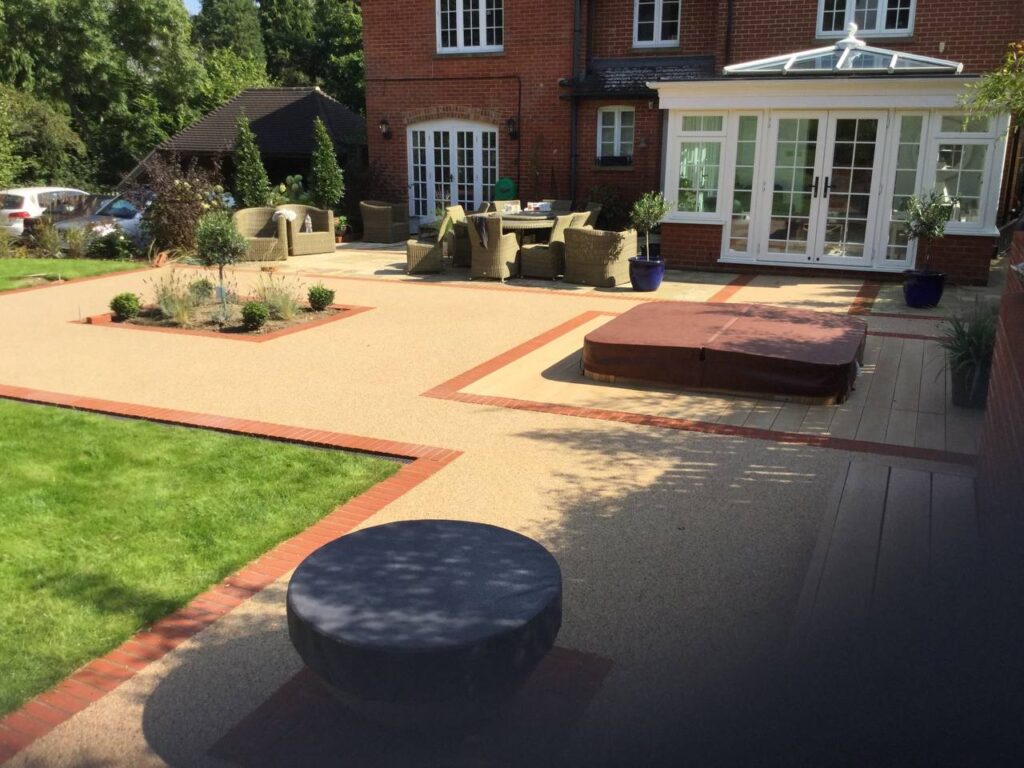
How Can Resin Bound Paths Improve the Appearance and Usability of Outdoor Spaces?
Garden paths have an important practical purpose, but they also influence how an outdoor space looks and feels. A poorly positioned, uneven or deteriorating path can make moving around the property awkward, while also interrupting the appearance of lawns, planting and other landscaped areas. A well-designed path should do the opposite: provide a clear, comfortable route while fitting naturally into the wider garden.
For homeowners in Ashtead, Surrey, resin bound surfacing can be an attractive option when creating new paths or improving existing routes. Its continuous aggregate finish can provide a clean, defined appearance while allowing paths to be designed around the way the outdoor space is actually used.
Why Can Resin Bound Surfacing Work So Well for Garden Paths?
Resin bound surfacing is created by mixing selected aggregates with resin before the material is laid and finished to form a relatively smooth, continuous surface. Unlike loose gravel, the aggregate is held together within the finished system.
Its suitability for a particular path still depends on appropriate preparation, a suitable base, correct levels and consideration of drainage. When these elements are properly planned, resin bound surfacing can combine visual consistency with practical everyday use.
A Continuous Finish Can Make Paths Look More Refined
One of the most noticeable characteristics of a resin bound path is the absence of the repeated joint pattern found in many individually laid paving systems.
This creates a more continuous appearance from one end of the route to the other.
For gardens where homeowners want a relatively clean and understated finish, this can help the path complement surrounding features rather than becoming visually complicated.
Resin Bound Paths Can Help Connect Different Garden Areas
A good garden path should have a clear purpose.
It may connect an entrance with the rear garden, lead from a patio to another outdoor area or provide a convenient route between frequently used parts of the property.
Using one consistent resin bound finish can help these different areas feel more connected.
Rather than looking like separate sections added at different times, the path can become part of a more coordinated overall layout.
The Aggregate Finish Adds Visual Character
A resin bound surface is continuous, but it does not have to appear plain.
The exposed aggregate provides natural texture and variation across the path.
Aggregate selection can influence the overall character of the finished surface, allowing the path to work with surrounding landscaping and the appearance of the property.
The objective should be to choose a finish that complements the outdoor space rather than unnecessarily dominating it.
Paths Can Become Part of the Garden Design
A path is sometimes treated as nothing more than a route between two points.
However, its position, width, shape and surface can significantly influence the overall appearance of a garden.
A thoughtfully designed resin bound path can provide visual structure, helping to separate lawns, planting and other areas while still linking them together.
This can make the complete outdoor space feel more deliberate and organised.
Straight Paths Can Create a Defined Appearance
Where a garden has a more structured layout, straight resin bound paths can provide clear visual lines.
Defined edges can reinforce this effect and create a strong relationship between the path and adjoining areas.
The width and position should still reflect how the route will actually be used.
A path should not be designed purely for appearance if its dimensions make everyday movement inconvenient.
Curved Paths Can Create a Softer Route
Some gardens suit a less formal layout.
A gently curved path can follow planting areas, move around existing features or provide a softer transition between different parts of the garden.
Resin bound surfacing can work effectively with carefully planned curves because the finished surface is not dependent on maintaining rows of individual paving units.
Good edging remains important for defining the intended shape.
Clear Edging Improves the Finished Appearance
The edges of a path have a significant influence on how professional the completed installation looks.
They create the transition between the resin bound surface and surrounding lawns, planting or other materials.
Well-planned edging can give the path a crisp outline and help reinforce its intended shape.
The edge treatment should therefore be considered as part of the design rather than as an afterthought.
Resin Bound Surfacing Can Replace Tired Garden Paths
Older paths can deteriorate in different ways.
Sections may become uneven, surfaces may crack or the route may simply no longer fit with wider improvements to the garden.
Replacing an ageing path with resin bound surfacing can provide an opportunity to address both its condition and its design.
Rather than automatically reproducing the existing layout, homeowners can consider whether the route, width and connections could also be improved.
An Existing Path Cannot Always Simply Be Covered
Resin bound surfacing should not be treated as a way to conceal problems underneath.
The condition of an existing path needs to be assessed before determining whether it can form part of the new construction.
If the underlying surface is extensively cracked, moving or unstable, simply covering it may allow those weaknesses to affect the new finish.
Preparation should address the cause of deterioration rather than hiding the visible symptoms.
The Base Is Fundamental to a Good Resin Bound Path
The resin bound layer is the visible part of the installation, but the construction beneath it is equally important.
A stable and suitable base provides support for the finished surface.
If the underlying construction moves or settles excessively, the appearance and performance of the path can be affected.
This is why professional resin bound installation begins below the finished surface.
Ground Preparation Should Match Existing Conditions
Not every garden starts with the same conditions.
A new path being constructed across previously unsurfaced ground requires a different approach from a route replacing an established hard surface.
Ground conditions, existing materials and the intended use of the path all influence the preparation required.
Assessing these factors before installation helps establish a dependable foundation for the finished surface.
Correct Levels Make Paths More Comfortable to Use
The height of a path in relation to surrounding surfaces needs careful consideration.
A route that sits awkwardly above or below adjoining areas can create inconvenient transitions.
This is particularly important where the path meets entrances, patios or other hard surfaces.
Planning levels properly helps create a more natural connection between different areas of the property.
Resin Bound Paths Can Provide a Comfortable Walking Surface
For pedestrian routes, the character of the finished surface matters.
A properly installed resin bound path provides a relatively smooth, consistent surface while retaining the texture of the aggregate.
This can make everyday movement more straightforward than navigating an uneven or badly deteriorated path.
The quality of the base and installation remains important because surface consistency depends on what supports it.
A Defined Path Can Reduce Unnecessary Movement Across Lawns
Where there is no convenient route through a garden, people naturally create their own.
Repeated movement across grass can gradually establish informal tracks, particularly between frequently used areas.
A properly positioned resin bound path creates a clear route and can help direct everyday movement through the garden more effectively.
The key is positioning it where people genuinely need to travel.
Side Access Routes Can Become More Practical
Narrow areas beside a property are often used frequently despite receiving relatively little attention when a garden is designed.
These routes may be used for moving bins, gardening equipment and other everyday items.
An uneven or poorly surfaced side path can make this unnecessarily awkward.
Where suitable, resin bound surfacing can create a clearer, more consistent route through these practical areas.
Wider Paths Can Improve Everyday Usability
Path width should be based on function rather than appearance alone.
A lightly used route through planting may require different dimensions from a main access path used regularly.
If garden equipment or other items need to be moved along the route, sufficient width becomes particularly important.
Planning these requirements before installation helps ensure the finished path remains useful rather than simply attractive.
Paths Around Seating Areas Need Careful Planning
A path leading towards a patio or seating area should feel like a natural continuation of the garden layout.
An awkward connection can make the two surfaces appear unrelated.
Using resin bound surfacing strategically can help create visual continuity, particularly where the same or complementary finish is incorporated into connected pedestrian areas.
Transitions should be planned before installation rather than improvised afterwards.
Resin Bound Paths Can Help Define Planting Areas
Paths can provide more than access.
They can also establish clear edges around planted sections and help organise the garden visually.
A defined resin bound route can create contrast between the textured aggregate surface and surrounding vegetation.
This can make planting feel more deliberate while also providing convenient access for routine garden maintenance.
Fewer Joints Create a Cleaner Visual Effect
Paths made from individual units naturally contain joints.
For some garden designs, these form an attractive part of the appearance.
For others, homeowners prefer a more uninterrupted finish.
Resin bound surfacing provides that alternative, creating a path with fewer visual breaks across its length.
This can be particularly effective where a simple, contemporary or understated appearance is desired.
Fewer Joints Can Also Simplify Routine Cleaning
Leaves, soil and garden debris will still accumulate on any outdoor path.
Resin bound paths are not maintenance-free and should be cared for appropriately.
However, the relatively continuous finish avoids the repeated joint pattern found in some other surfacing options.
Routine sweeping can help prevent organic material from building up and keep the path looking well maintained.
Drainage Must Be Considered as Part of the Installation
Rainwater management should be planned whenever a new outdoor surface is installed.
Resin bound systems can form part of a permeable construction when the complete build-up beneath the surface is also designed appropriately.
The surface material alone should not be assumed to solve every drainage problem.
Existing ground conditions, levels and the construction beneath the resin bound layer all need to be considered.
Existing Standing Water Should Be Investigated
If an old path regularly holds water in particular places, installing a new surface without understanding why can leave the underlying issue unresolved.
Low spots, unsuitable levels or other drainage conditions may be contributing to the problem.
These should be assessed during preparation.
A new path should be constructed around appropriate water management rather than simply covering an existing drainage weakness.
Transitions Between Different Surfaces Need Attention
A garden path often meets several different materials.
It may run from a resin bound driveway towards a lawn, connect with a patio or finish beside another established surface.
These meeting points influence both appearance and usability.
Careful detailing can make the transitions feel intentional while avoiding awkward changes in level.
Resin Bound Paths Can Work With Larger Outdoor Improvements
Where a garden is being reorganised, planning paths at the same time can create a more coherent result.
The route can be positioned according to future planting, seating and access requirements rather than being forced around features installed earlier.
This approach can also make preparation more straightforward because the path becomes part of the overall project sequence.
Good Path Design Should Follow How the Property Is Used
The most attractive path is not necessarily the most useful one.
A route that takes an unnecessary detour may look appealing on a plan but prove inconvenient in everyday use.
Before installation, it is worth observing how people naturally move between different areas of the property.
The final layout can then balance appearance with practical movement.
Resin Bound Surfacing Can Make Narrow Spaces Feel More Ordered
Small side areas and narrow garden routes can easily appear cluttered when several materials and uneven surfaces are present.
A consistent resin bound finish can simplify the appearance.
Clear boundaries and a continuous surface can make the route feel more purposeful, particularly when surrounding features are also neatly defined.
Larger Gardens Can Benefit From Visual Continuity
In a larger outdoor space, several paths may be required.
Using related surfacing can help prevent the garden from feeling fragmented.
Resin bound paths can provide a consistent visual thread between separate areas while allowing lawns, planting and other landscaping to provide variation.
There is no requirement for every hard surface to match, but carefully chosen continuity can improve the overall design.
An Attractive Path Should Still Be Practical to Maintain
Appearance should not be considered separately from everyday maintenance.
Leaves and loose garden material should be removed periodically, and the surface should be kept appropriately clean.
Surrounding planting may also need to be managed so that it does not continually spread across the route.
A path that is properly positioned and clearly edged can make these routine tasks easier.
Resin Bound Is Not Automatically Suitable for Every Existing Path
Every installation should be assessed individually.
The existing base, ground movement, drainage, levels and intended use can all affect whether resin bound surfacing is appropriate.
Recommending the material without understanding these conditions can result in the wrong approach.
Professional assessment provides an opportunity to identify what preparation is genuinely required before deciding on the finished surface.
Appearance Depends on Installation Quality
Resin bound surfacing is often chosen because of its clean and consistent appearance.
Achieving that result requires careful preparation and application.
Uneven levels, poorly planned edges or inadequate base construction can undermine the finished effect regardless of the aggregate selected.
The workmanship beneath and around the surface is therefore just as important as the visible finish.
The Path Should Complement the Property Rather Than Dominate It
A garden path usually works best when it forms part of the wider outdoor space rather than becoming its main visual feature.
Aggregate selection, path width, edging and layout can all be adjusted to create the appropriate balance.
A simple route with a well-chosen finish can often provide greater visual improvement than an unnecessarily complicated design.
Professional Installation Starts With Assessing the Area
At NS Driveways Ashtead, we approach resin bound paths in Ashtead, Surrey by first considering how the area needs to function.
Existing ground conditions, base suitability, drainage, path dimensions, surrounding surfaces and the intended route all influence the installation.
Where resin bound surfacing is appropriate, careful preparation can create a path that provides both a defined visual feature and a practical everyday route through the property.
The aim is not simply to install an attractive surface, but to create one that works properly with the surrounding outdoor space.
Conclusion
Resin bound paths can improve outdoor spaces by combining a clean, continuous aggregate finish with a practical and clearly defined pedestrian route. They can connect different parts of a garden, improve side access, define planting areas and replace tired or uneven paths with a more coordinated surface.
The quality of the result depends on more than the resin bound finish itself. Base preparation, ground conditions, drainage, levels, edging, path width and the way the route connects with surrounding areas all need to be considered.
If you are considering a resin bound path for your property in Ashtead, Surrey, contact NS Driveways Ashtead. We can assess the existing area, discuss how the path needs to function and recommend an appropriate approach based on the conditions and intended use of your outdoor space.
Call us on: 01372 233 895
Click here to find out more about NS Driveways Ashtead
Click here to complete our contact form and see how we can help with your driveway needs.