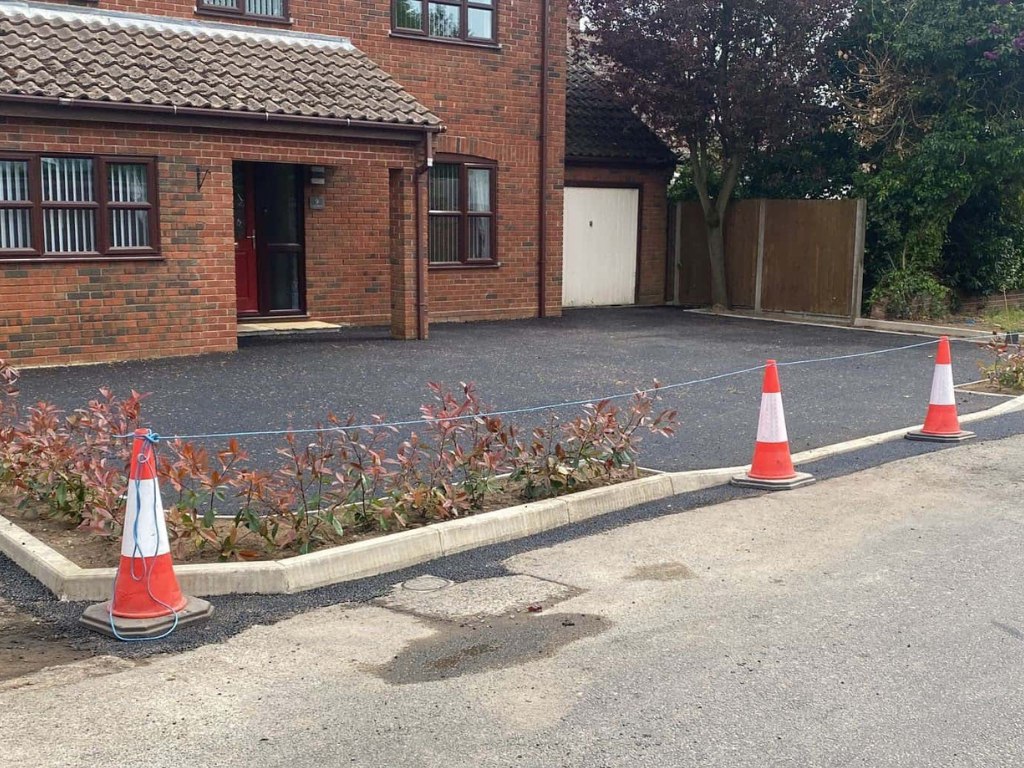
Can a Badly Worn Tarmac Driveway Be Saved?
A tarmac driveway can provide a strong, practical surface for many years, but constant vehicle movements, changing weather conditions and general ageing will eventually begin to show. Small cracks can spread, sections may become uneven, edges can deteriorate and the surface may gradually lose its uniform appearance. When this happens, homeowners often assume that the entire driveway must be removed and replaced. In reality, whether a badly worn tarmac driveway can be saved depends largely on what is happening beneath the visible surface.
At NS Driveways Ashtead, we provide professional driveway and surfacing services throughout Ashtead, Surrey. By assessing both the visible deterioration and the condition of the underlying construction, it is possible to determine whether repairs or resurfacing can restore the driveway or whether more extensive work is required.
Surface Wear Does Not Always Mean Complete Failure
An old tarmac surface can look considerably worse than the structure beneath it actually is.
Years of use may result in:
- Surface fading and weathering
- Small cracks
- Worn traffic areas
- Minor localised depressions
- Deteriorated edges
- Previous repair patches
- A rough or inconsistent finish
If the underlying base remains stable, these problems may not necessarily require complete reconstruction.
The distinction between surface deterioration and structural failure is therefore extremely important.
The Condition of the Base Is the Key Factor
A durable tarmac driveway depends heavily on the layers underneath it.
The surface distributes vehicle loads, but the underlying construction provides the stability needed to support those loads. If this foundation remains sound, there may be several options for restoring the driveway.
If the base has moved, weakened or deteriorated extensively, simply improving the upper surface is unlikely to provide a satisfactory long-term solution.
This is why professional assessment should come before deciding how an ageing driveway should be treated.
Can Cracked Tarmac Be Repaired?
Some cracking can be repaired, particularly where it is confined to specific sections.
However, the pattern of cracking matters.
A small isolated crack is very different from extensive interconnected cracking across large areas of the driveway. Widespread cracking can indicate movement or deterioration beneath the surface.
Repairing the visible cracks without addressing their cause may only provide a temporary improvement.
A professional inspection can establish whether the cracking is primarily superficial or evidence of a deeper problem.
Localised Depressions May Be Repairable
A sunken section does not necessarily mean the complete driveway has failed.
If settlement is restricted to one particular area, the affected section can sometimes be removed so that the underlying materials can be corrected before the tarmac is reinstated.
The important step is determining why the depression developed.
Possible causes include:
- Insufficient compaction
- Localised base movement
- Repeated loading
- Water affecting the supporting layers
- Weakness around the edge of the driveway
Correcting the underlying cause is essential if the repaired area is to remain stable.
When Can Resurfacing Be Effective?
Resurfacing can be an excellent option when the existing driveway has become heavily worn but still has a fundamentally stable base.
Rather than reconstructing everything beneath the driveway, the existing surface can be suitably prepared and a new surface layer applied where conditions allow.
Resurfacing can address issues such as:
- General surface deterioration
- Extensive weathering
- Loss of a consistent finish
- Numerous minor surface defects
- An ageing appearance
However, resurfacing should only be considered where the existing construction is suitable to receive the new layer.
Why Resurfacing Cannot Fix an Unstable Foundation
A new tarmac layer may dramatically improve appearance, but it cannot compensate for significant movement underneath.
If the existing base is unstable, cracks and depressions can eventually affect the new surface as well.
This is why simply covering an old driveway is not always the right answer.
At NS Driveways Ashtead, we consider the condition of the complete driveway before recommending resurfacing. The objective is to provide a solution that addresses the actual cause of deterioration rather than merely hiding it.
Drainage Can Influence Tarmac Deterioration
Water management is another important factor when assessing an ageing driveway.
A properly constructed surface should direct rainfall appropriately rather than allowing it to remain in persistent low areas.
If depressions or poor falls cause water to collect repeatedly, the affected areas should be investigated as part of any remedial work.
Restoring an old driveway successfully may therefore involve correcting levels or other underlying issues as well as renewing the visible surface.
Deteriorating Edges Need Attention
Driveway edges can sometimes deteriorate before the central surface.
Unsupported or damaged edges may begin to:
- Crack
- Crumble
- Break away
- Lose their original shape
Where the problem remains localised, suitable remedial work may help restore support before further deterioration spreads into the main driveway.
Ignoring damaged edges can allow relatively manageable problems to become more extensive.
Previous Repairs Tell an Important Story
An older driveway may contain several repaired sections.
This is not automatically a problem, but the location and condition of those repairs can reveal useful information. If one isolated area has previously required attention and remains stable, the driveway may still be performing well overall.
If repairs are appearing repeatedly across different sections, broader deterioration may be taking place.
A professional assessment looks at the complete pattern rather than concentrating solely on the most obvious damaged area.
When Might Reconstruction Be More Appropriate?
There comes a point where repairing individual sections or resurfacing the driveway may no longer address the underlying condition.
More extensive work may be appropriate where there is:
- Widespread structural movement
- Severe cracking across large areas
- Numerous deep depressions
- Extensive base deterioration
- Repeated failure of previous repairs
- Significant unevenness throughout the driveway
In these circumstances, rebuilding the affected construction provides an opportunity to establish a suitable foundation before installing the new surface.
Why Professional Assessment Prevents Unnecessary Work
A badly worn driveway should not automatically be condemned, but neither should extensive structural problems simply be covered with another layer of tarmac.
The right solution lies between these two extremes and depends on the condition of the individual driveway.
At NS Driveways Ashtead, we assess tarmac driveways throughout Ashtead, Surrey, to determine whether deterioration is primarily affecting the surface or extends into the supporting construction. This allows the recommended work to match the actual problem.
Where existing foundations remain suitable, retaining them can be practical. Where they have failed, addressing them properly helps create a much more dependable finished surface.
A Good Repair Should Address the Cause
The difference between a cosmetic repair and an effective repair is whether the underlying cause has been considered.
For example, filling a depression without correcting unstable material beneath it may leave the area vulnerable to further settlement. Likewise, resurfacing widespread cracks without investigating movement underneath can allow defects to return.
Professional driveway restoration focuses on why the damage developed before deciding how it should be corrected.
Conclusion
A badly worn tarmac driveway can often be saved, but the appropriate solution depends on the condition beneath the visible surface. Where the base remains stable, localised repairs or professional resurfacing may restore both performance and appearance without completely reconstructing the driveway.
Where deterioration extends into the foundations, however, more extensive remedial work may be necessary to achieve a reliable long-term result. The key is distinguishing ordinary surface wear from structural failure before work begins.
If your tarmac driveway in Ashtead, Surrey, is cracked, uneven or heavily worn, NS Driveways Ashtead can assess its condition and recommend an appropriate solution. Contact our team to arrange an inspection and discuss how professional driveway repairs, resurfacing or renewal can restore a practical and attractive surface to your property.
Call us on: 01372 233 895
Click here to find out more about NS Driveways Ashtead
Click here to complete our contact form and see how we can help with your driveway needs.